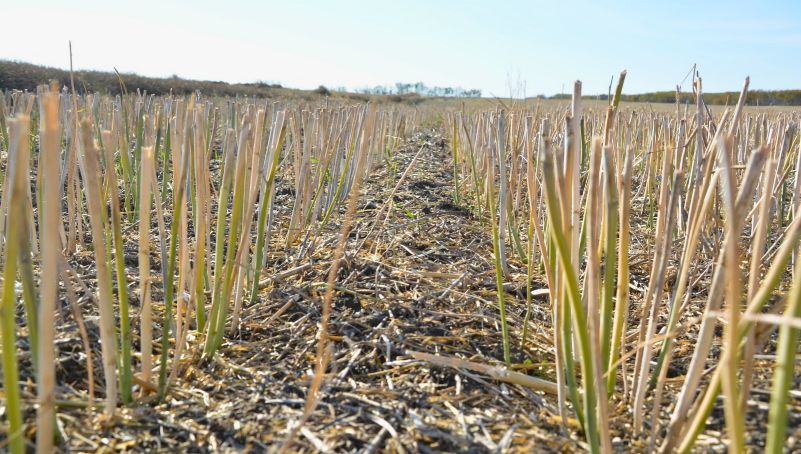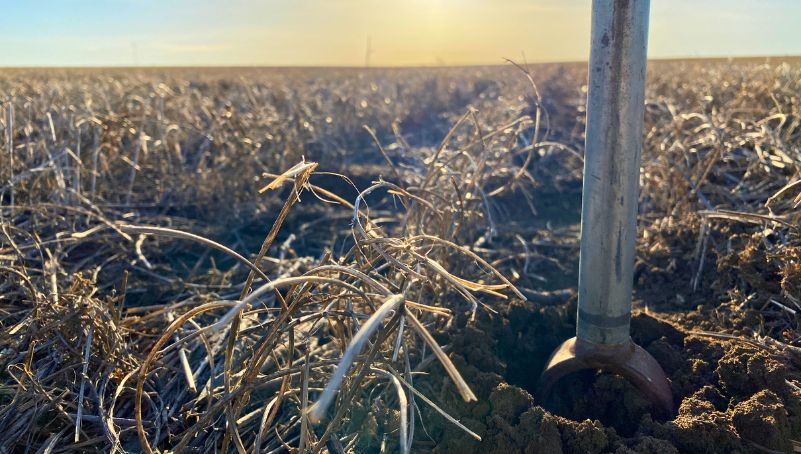
Harvest is in full swing; the workdays are getting longer despite daylight getting shorter, and the end of another growing season is approaching. An essential aspect of post-harvest field work that should not be overlooked is giving the soil some TLC with soil testing. Soil testing is a key step toward obtaining target yields. Knowing what your soil needs means you can avoid nutrient overloads or shortages, helping your plants thrive and reach those yield goals.
Every year is different, and putting down the same blend you use every year is not the most efficient, or economic, approach to fertilizer. Without a soil test, you could be playing a guessing game with your crop's nutrients—either giving it too much or too little. That’s like trying to build a deck without a tape measure. Sure, you can eyeball how long each board should be, but at the end of the day the phrase “cut once, measure twice” exists for a reason.
Fall is generally the most common and convenient time for soil testing. It allows adequate processing time by the lab, an opportunity for you to utilize results on a flexible time schedule that works for you and your agronomist, and it gives you proactive opportunities to book your fertilizer.
Getting data on more than just nutrient levels allows you to also make informed decisions about herbicides like Focus® NXT, which has use restrictions based on organic matter. Other products might restrict use by soil pH or CEC. The more data you have, the more confidence you can have in the decisions that you’re making. This doesn’t just apply to fertilizers, but also to pesticide choices throughout the entirety of the crop year.
The appropriate method to use will depend on the nutrient's properties (such as its soil mobility), whether you are using liquid or granular fertilizer, and the application method among other considerations. Available methods include:
1. Use a liquid micronutrient product incorporated in your liquid fertilizer, ideally seed-placed. WinField® United Canada offers the Ultra-Che® lineup of Zinc and Copper, as well as Liquid Boron 10% for this purpose.
2. Use a granular product to build soil test levels. This may be economically viable for land that is owned and will be farmed in the long term. However, it is generally a costly process because large quantities of the product are necessary to alter soil test levels, depending on the nutrient and the extent of deficiency.
Some of the roles of boron include:
• Regulates carbohydrate metabolism
• Maintains root cell wall integrity
• Involved in cell division and cell development
• Regulates the use of other nutrients
• Essential for pollen-tube formation
Boron’s availability is heavily influenced by soil texture. In soils with a low Cation Exchange Capacity (CEC), boron tends to become less available, making it harder for plants to find. This means higher soil test levels are needed to ensure plant uptake.
Should soil tests indicate low levels, Liquid Boron 10% is a great option to get a starter quantity of 0.5 to 2.0 L/ac applied with your crop in an available form.
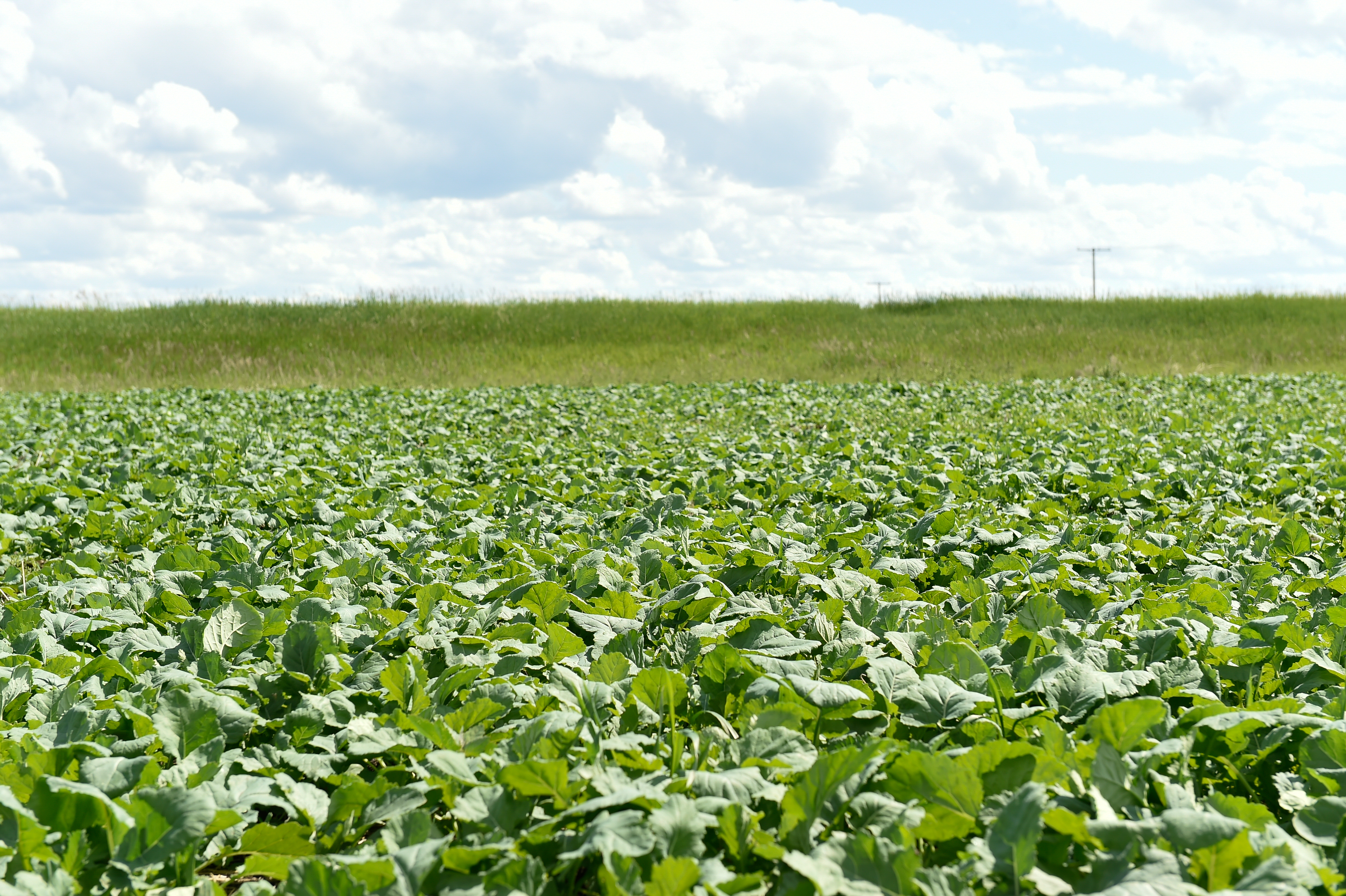
Other roles of zinc within the plant include:
• Helping with seed-formation and pollination
• Important for maintaining healthy roots, leading to higher yield
• Supports plant enzyme and hormone systems
Zinc deficiencies are more common in soils with low organic matter, low CEC, or high pH. Availability of soil zinc to plants decreases when soils are cool and wet, which are generally found in the spring at the time of seeding. With zinc being less available at this crucial germination and emergence stage of the plant's life, soil applied liquid zinc is a great way to combat this issue and start the crop off on the right foot.
“With (the addition of) Ultra-Che Zinc, we see better root structure and earlier emergence. It also seems to give the corn better standability and helps it better tolerate drought stress,” says Dale Shaw, Business Agronomist and Manager at Double Diamond Farm Supply in Minto, Manitoba. “In our trials, these effects have transferred into yield, where we have measured over 1mt/ac more in silage yield compared to fields without the addition of Ultra-Che Zinc.”
UltraChe Zinc 9% is a chelated zinc product that works well when applied at 1.0 to 2.0L/ac. The “Che” refers to the chelation formulation of the product. According to Saskatchewan Agriculture, chelated micronutrients remain in the plant-available form longer because the chelated structure slows the micronutrient reaction with soil minerals. Chelation also allows the micronutrient to remain in solution and become mixable with orthophosphate. Formulations that aren’t chelated will gel when applied with orthophosphate based liquid phosphorous starter products.
According to the Western Producer, copper is the most common micronutrient to be deficient in Western Canada. Sandy soils found in the black and grey soil zones are most likely to have copper deficiencies present.
Copper plays various critical roles within the plant such as:
• Controls photosynthesis, plant metabolism, and respiration
• Cell wall lignification
• Stimulates protein formulation
Copper levels can affect the flowering period of crops, and if there's not enough copper, it can extend this period, making the crops more susceptible to diseases like ergot. Soil copper will be less available when the field has high soil pH, high organic matter content (OM), or lighter sandy soil.
WinField United offers Ultra-Che Copper 7.5% EDTA, which is typically applied at 0.5 to 1L/ac with liquid fertilizer.
Want to learn more about chelation and the different types of foliar and soil applied micronutrients? Come out to the WinField United Canada Agronomy Academy in Saskatoon, December 2 and 3, 2026 where Todd Cardwell from Land O’Lakes will be breaking down these differences, and more.
Key micronutrients, such as boron, zinc, and copper, are frequently deficient across Western Canada and play critical roles in plant physiology, including root development, reproductive success, and enzyme function.
Selection of the appropriate application method—granular, seed-placed liquid, or foliar—depends on crop type, soil conditions, and economic considerations. Chelated liquid products like WinField United’s Ultra-Che lineup, as well as Liquid Boron 10%, offer efficient, plant-available solutions for early season application. Incorporating soil testing with a micronutrient management strategy supports optimal crop establishment, improved nutrient use efficiency, and enhanced yield potential.
Just like you wouldn’t build a deck without a tape measure, don’t try to build your crop plan without a soil test.
1. Source – Grainnews https://www.grainews.ca/features/micronutrient-application-tips/
2. Source – Alberta Agriculture https://www.alberta.ca/micronutrient-requirements-of-crops#jumplinks-4
Every year is different, and putting down the same blend you use every year is not the most efficient, or economic, approach to fertilizer. Without a soil test, you could be playing a guessing game with your crop's nutrients—either giving it too much or too little. That’s like trying to build a deck without a tape measure. Sure, you can eyeball how long each board should be, but at the end of the day the phrase “cut once, measure twice” exists for a reason.
Fall is generally the most common and convenient time for soil testing. It allows adequate processing time by the lab, an opportunity for you to utilize results on a flexible time schedule that works for you and your agronomist, and it gives you proactive opportunities to book your fertilizer.
What gets tested?
In addition to the main macros of nitrogen, phosphorous, potassium, and sulphur, soil tests also go through other soil cations including calcium, magnesium, iron, and the cation exchange capacity (CEC). Other structure factors like organic matter and pH are commonly measured, as well as micronutrients like copper, zinc, and boron.Getting data on more than just nutrient levels allows you to also make informed decisions about herbicides like Focus® NXT, which has use restrictions based on organic matter. Other products might restrict use by soil pH or CEC. The more data you have, the more confidence you can have in the decisions that you’re making. This doesn’t just apply to fertilizers, but also to pesticide choices throughout the entirety of the crop year.
Why do we care about micronutrients?
There are three key micronutrients that are most commonly deficient on the prairies – copper, zinc, and boron. These three micronutrients are each required, in small quantities, for your crop to perform optimally. For each micronutrient, there are four main options that can be utilized to address a deficiency.The appropriate method to use will depend on the nutrient's properties (such as its soil mobility), whether you are using liquid or granular fertilizer, and the application method among other considerations. Available methods include:
1. Use a liquid micronutrient product incorporated in your liquid fertilizer, ideally seed-placed. WinField® United Canada offers the Ultra-Che® lineup of Zinc and Copper, as well as Liquid Boron 10% for this purpose.
2. Use a granular product to build soil test levels. This may be economically viable for land that is owned and will be farmed in the long term. However, it is generally a costly process because large quantities of the product are necessary to alter soil test levels, depending on the nutrient and the extent of deficiency.
3. Use a granular fertilizer product, or micronutrient coating on your granular fertilizer (such as Koch Agronomic Services’ WOLF TRAX™ DDP). This can provide enough micronutrient to get the plant off to a strong start.
4. Address it in-crop with a foliar micronutrient application, potentially as part of a tissue testing program. These can generally be tank-mixed with a herbicide application depending on application timing. WinField United’s MAX-IN® lineup can provide deficient fields with the required boost.Boron
The discussion of boron generally pertains to its opportunities in canola or pulse production. Small grain cereals do not typically economically respond to boron applications. Boron is important both in early vegetation as well as at the reproductive stage of the plant’s life. This nutrient is a homebody within the plant, remaining immobile, but is soil mobile.Some of the roles of boron include:
• Regulates carbohydrate metabolism
• Maintains root cell wall integrity
• Involved in cell division and cell development
• Regulates the use of other nutrients
• Essential for pollen-tube formation
Boron’s availability is heavily influenced by soil texture. In soils with a low Cation Exchange Capacity (CEC), boron tends to become less available, making it harder for plants to find. This means higher soil test levels are needed to ensure plant uptake.
Should soil tests indicate low levels, Liquid Boron 10% is a great option to get a starter quantity of 0.5 to 2.0 L/ac applied with your crop in an available form.
Zinc
Canola, pulses, and cereals have all been shown to respond well to zinc. Zinc likes to move around within the plant and has variable mobility, but when it comes to soil, it prefers to stay put and is relatively soil immobile. Nevertheless, zinc is crucial for all crops, especially when it comes to kickstarting seed germination and early growth.Other roles of zinc within the plant include:
• Helping with seed-formation and pollination
• Important for maintaining healthy roots, leading to higher yield
• Supports plant enzyme and hormone systems
Zinc deficiencies are more common in soils with low organic matter, low CEC, or high pH. Availability of soil zinc to plants decreases when soils are cool and wet, which are generally found in the spring at the time of seeding. With zinc being less available at this crucial germination and emergence stage of the plant's life, soil applied liquid zinc is a great way to combat this issue and start the crop off on the right foot.
“With (the addition of) Ultra-Che Zinc, we see better root structure and earlier emergence. It also seems to give the corn better standability and helps it better tolerate drought stress,” says Dale Shaw, Business Agronomist and Manager at Double Diamond Farm Supply in Minto, Manitoba. “In our trials, these effects have transferred into yield, where we have measured over 1mt/ac more in silage yield compared to fields without the addition of Ultra-Che Zinc.”
UltraChe Zinc 9% is a chelated zinc product that works well when applied at 1.0 to 2.0L/ac. The “Che” refers to the chelation formulation of the product. According to Saskatchewan Agriculture, chelated micronutrients remain in the plant-available form longer because the chelated structure slows the micronutrient reaction with soil minerals. Chelation also allows the micronutrient to remain in solution and become mixable with orthophosphate. Formulations that aren’t chelated will gel when applied with orthophosphate based liquid phosphorous starter products.
Copper
Cereal crops respond particularly well to copper applications when soil tests indicate they are running low. While copper is immobile in the soil, its mobility within the plant varies depending on the soil pH; the lower the soil pH levels, the more available it becomes to the plant.According to the Western Producer, copper is the most common micronutrient to be deficient in Western Canada. Sandy soils found in the black and grey soil zones are most likely to have copper deficiencies present.
Copper plays various critical roles within the plant such as:
• Controls photosynthesis, plant metabolism, and respiration
• Cell wall lignification
• Stimulates protein formulation
Copper levels can affect the flowering period of crops, and if there's not enough copper, it can extend this period, making the crops more susceptible to diseases like ergot. Soil copper will be less available when the field has high soil pH, high organic matter content (OM), or lighter sandy soil.
WinField United offers Ultra-Che Copper 7.5% EDTA, which is typically applied at 0.5 to 1L/ac with liquid fertilizer.
Want to learn more about chelation and the different types of foliar and soil applied micronutrients? Come out to the WinField United Canada Agronomy Academy in Saskatoon, December 2 and 3, 2026 where Todd Cardwell from Land O’Lakes will be breaking down these differences, and more.
It's Time For Kick Off
Kickstart fertility management this fall with timely soil testing. This gives you essential data for calibrating fertilizer inputs to crop yield targets, avoiding inefficiencies in both under- and over-application.Key micronutrients, such as boron, zinc, and copper, are frequently deficient across Western Canada and play critical roles in plant physiology, including root development, reproductive success, and enzyme function.
Selection of the appropriate application method—granular, seed-placed liquid, or foliar—depends on crop type, soil conditions, and economic considerations. Chelated liquid products like WinField United’s Ultra-Che lineup, as well as Liquid Boron 10%, offer efficient, plant-available solutions for early season application. Incorporating soil testing with a micronutrient management strategy supports optimal crop establishment, improved nutrient use efficiency, and enhanced yield potential.
Just like you wouldn’t build a deck without a tape measure, don’t try to build your crop plan without a soil test.
1. Source – Grainnews https://www.grainews.ca/features/micronutrient-application-tips/
2. Source – Alberta Agriculture https://www.alberta.ca/micronutrient-requirements-of-crops#jumplinks-4